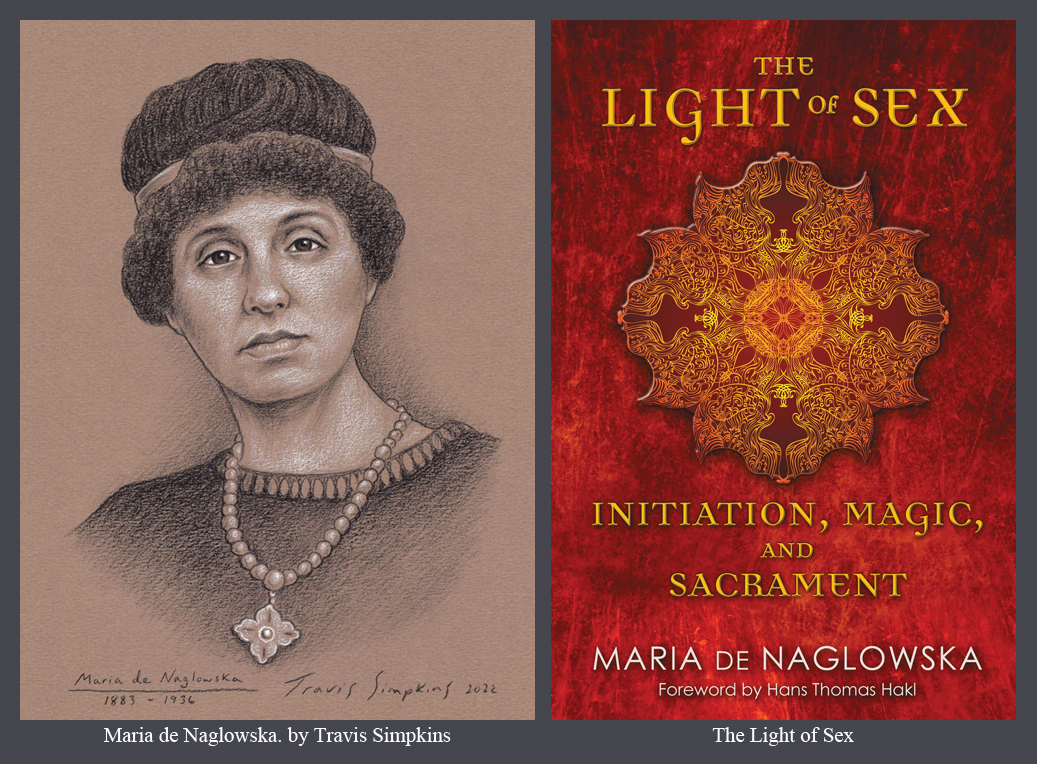
Magia Sexualis. Paschal Beverly Randolph. Maria de Naglowska. Sex Magick
Maria de Naglowska's French translation of "Magia Sexualis" was published 50 years after the death of its supposed author Paschal Beverly Randolph. While some of the text can be traced back to known writings of Randolph, much of it cannot, and it is likely that de Naglowska intermixed her own thoughts within the book. As such, it is a compilation of writings by two important Occult authors.
A step-by-step guide to the occult science of sex magic
Based on the practices of P. B. Randolph, occult rival of H. P. Blavatsky
Reveals how to perform sex magic rituals for specific real-world results, such as greater strength or enhancement of the senses
Explains how to create magical talismans, such as rings with specific planetary forces, how to enliven a painting, and how to charge an effigy
Conceived by Paschal Beverly Randolph, Magia Sexualis has been heralded as the most influential book about sex magic ever written, surviving to the present day solely through Maria de Naglowska’s French translation. Published more than 50 years after Randolph’s death, the authorship of this “translation” has been repeatedly called into question: While the greater part of the content can be traced to Randolph’s known works, a very significant portion cannot--leading to the conclusion that this work was supplemented by Naglowska’s own sex magic work and extensive occult teachings.
Magia Sexualis explains Randolph’s meticulous science of sex magic, practiced by the Brotherhood of Eulis and the Hermetic Brotherhood of Light. Beginning with exercises to develop essential skills, the book explains in step-by-step detail how to perform sex magic rituals for specific results, such as greater strength or enhancement of the senses, how to charge and use a “volt”--an effigy of a specific person you want to influence or protect, how to enliven a painting in order to influence those around it, and how to create magical talismans with specific planetary forces, using what Randolph calls “fluid condensers.” This work from two great occult minds shows that true power of the spirit is acquired in conjunction with the power of sex--affirming that “sex is the fundamental force in every being, the most powerful force in Nature, and the most characteristic evidence of God.”
The Hermetic Brotherhood of Luxor. Joscelyn Godwin. Christian Chanel. John P. Deveney
The Hermetic Brotherhood of Luxor, founded in the 1880s, was a correspondence school and Order of practical occultism. It was a contemporary and rival of the Theosophical Society and the two groups had some overlap in membership. The Brotherhood was inspired and led by Max Theon, and administered by Peter Davidson and Thomas H. Burgoyne. The group also claimed that Paschal Beverly Randolph had some preliminary involvement.
The Hermetic Brotherhood of Luxor, active in the last decades of the 19th century, was the only order of its time that taught practical occultism in the Western Mystery Tradition. This is the first complete and undistorted account, tracing the origins, founders, and practices of this very secretive order, which counted among its members many of the well-known figures of late 19th-century occultism, spiritualism, and Theosophy, including Max Theon, Peter Davidson, Thomas Henry Burgoyne and Paschal Beverly Randolph. This scholarly work provides all the materials for revisioning the history, assigning the Hermetic Brotherhood of Luxor its rightful place as one of the most influential esoteric orders of its time.